Magna Carta and human rights
30 Mar 2022
‘If we allow the Human Rights Act’s destruction, the precious house of rights we’ve built together will come tumbling down.’ Reflecting on the 800th anniversary of Magna Carta, Shami Chakrabarti warns us that today’s human rights legislation is under threat.
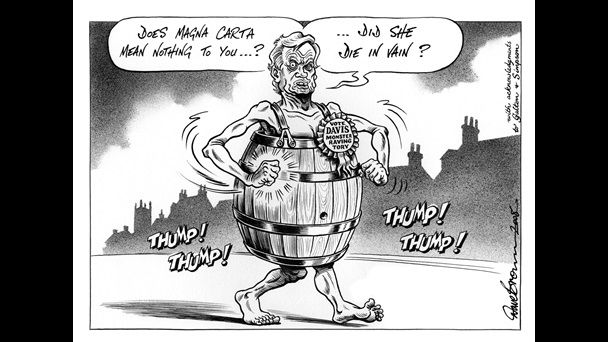
‘Does Magna Carta mean nothing to you? Did she die in vain?’ – so joked comedian Tony Hancock (1924–68) in Hancock’s Half Hour back in the 1950s. A light-hearted query, of course, but as we ready ourselves for Magna Carta’s 800th anniversary celebrations in June 2015 it is worth revisiting how relevant the ‘Great Charter’ still is.
On the one hand, for many, Magna Carta is alive and well. It remains a bedrock of Britishness; the foundation of all that’s good about laws and liberties from Land’s End to John O’Groats. The alternative view is that Magna Carta has been reduced to nothing but a symbol; a crumbling relic, redundant at law and in practice.
As always, the truth is probably somewhere in the middle.
There’s rather more nuance to the document than you might think. The 1215 original, which didn’t even bear the famous title at first, was swiftly scrapped by the Pope, as it had been dragged from ‘Bad King John’ under duress. Its beneficiaries were not oppressed serfs (who largely remained in slavery) but Anglo-Norman barons (themselves responsible for much of the oppressing) desperate to curb the monarch’s excesses. And Magna Carta embodied neither jury trial nor habeas corpus – both came later and over time. In reality, much of its text was pretty obscure and administrative – and, frankly, rather dull.
On the one hand, for many, Magna Carta is alive and well. It remains a bedrock of Britishness; the foundation of all that’s good about laws and liberties from Land’s End to John O’Groats. The alternative view is that Magna Carta has been reduced to nothing but a symbol; a crumbling relic, redundant at law and in practice.
As always, the truth is probably somewhere in the middle.
There’s rather more nuance to the document than you might think. The 1215 original, which didn’t even bear the famous title at first, was swiftly scrapped by the Pope, as it had been dragged from ‘Bad King John’ under duress. Its beneficiaries were not oppressed serfs (who largely remained in slavery) but Anglo-Norman barons (themselves responsible for much of the oppressing) desperate to curb the monarch’s excesses. And Magna Carta embodied neither jury trial nor habeas corpus – both came later and over time. In reality, much of its text was pretty obscure and administrative – and, frankly, rather dull.