Universal Declaration of Human Rights
30 Mar 2022
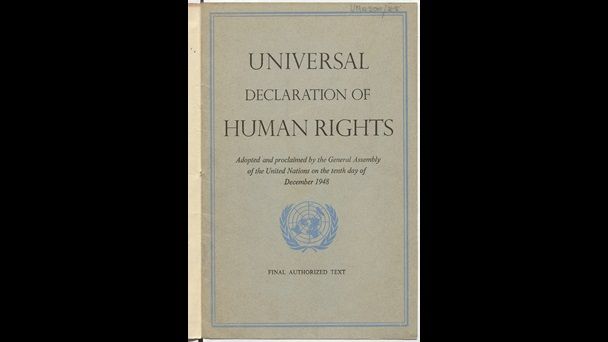
The Universal Declaration of Human Rights (UDHR) represents the first global codification of rights to which all human beings are inherently entitled. In 1947, the newly established United Nations, largely in response to the atrocities of World War II, set up a dedicated Human Rights Commission chaired by Eleanor Roosevelt (1884-1962). After 18 months’ deliberation the Commission drafted the UDHR, which was adopted by the UN on 10 December 1948.
The modern conception of human rights dates from the 1940s. The appalling abuses of human dignity and the disrespect for human life epitomised by the Holocaust were so shocking to popular opinion that governments formed a new organisation, the United Nations (UN), with a commitment to justice and peace in the world. The Charter of the UN was signed in 1945 and it proclaims respect for human rights as the means to achieving world peace. An international Human Rights Commission was established to draft the Universal Declaration of Human Rights (UDHR), which was proclaimed by the General Assembly of the UN on 10 December 1948.
The main innovation of the UDHR is that it recognises, for the first time, a universal entitlement to rights applying to all ‘members of the human family’. Previously, because of a concern for national sovereignty, states were immune from external control or moral pressure when they enacted discriminatory legislation or allowed their agents freedom to undertake extra-judicial killings or torture.
The UDHR has little legal power but it has huge moral force because there is agreement across national, religious and cultural boundaries that it sets out the principles and minimum standards to be respected by individuals and governments. This common language for describing entitlements and discrimination has been adopted across the world.
The preamble to the UDHR sets out the aims of the Declaration, namely to contribute to ‘freedom, justice and peace in the world’. This is to be achieved by the universal recognition of, and respect for, human rights. Human rights are then precisely defined in 30 articles. These can be summarised as:
personal rights (life, freedom, security, justice) in articles 2 to 11;
rights regulating relationship between people (freedom of movement, rights to found a family, asylum, nationality, property) in articles 12 to 17;
public freedoms and political rights (thought, religion, conscience, opinion, assembly, participation, democracy) in articles 18 to 21;
economic, social and cultural rights (social security, work, equal wages, trade unions, rest and leisure, adequate standard of living, education, cultural life) in articles 22 to 27.
British representatives were frustrated that it had moral but no legal obligation. It was not until 1976 that the International Covenant on Civil and Political Rights came into force, giving a legal status to most of the UDHR.
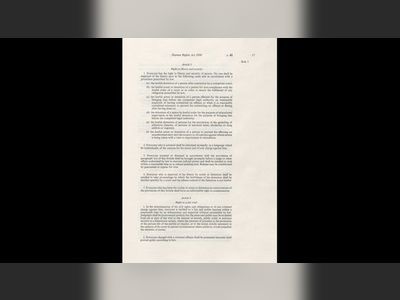
The UDHR, in Britain, influenced the 1998 Human Rights Act which includes the right to life, the right to a fair trial and freedom of expression. It recognised in British Law the European Convention on Human Rights, which had been ratified by the Council of Europe in 1953. The British Human Rights Act 1998 covers all of the articles and additional protocols of the European Convention with only minor amendments.
What are my rights?
The rights as set out in the Human Rights Act, 1998 are as follows:
the right to life
freedom from torture and degraded treatment
freedom from slavery and forced labour
the right to liberty
the right to a fair trial
the right not to be punished for something that wasn't a crime when you did it
the right to respect for private and family life
freedom of thought, conscience and religion
freedom of expression
freedom of assembly and association
the right to marry or form a civil partnership and start a family
the right not to be discriminated against in respect of these rights and freedoms
the right to own property
the right to an education
the right to participate in free elections and cultural life
the right to a nationality.
UDHR and Magna Carta
Discussions in the English-speaking world about the origins of rights invariably mention Magna Carta, in the context of forbidding detention without trial . For example, Article 9 of the Declaration, relating to freedom from arbitrary arrest, detention and exile, echoes the essence of clause 39 in the 1215 Magna Carta. Following the adoption of the Declaration by the United Nations General Assembly, the influence of Magna Carta was acknowledged by Eleanor Roosevelt. She declared in a speech to the Assembly that, ‘this Universal Declaration of Human Rights may well become the international Magna Carta of all men everywhere’.
The main innovation of the UDHR is that it recognises, for the first time, a universal entitlement to rights applying to all ‘members of the human family’. Previously, because of a concern for national sovereignty, states were immune from external control or moral pressure when they enacted discriminatory legislation or allowed their agents freedom to undertake extra-judicial killings or torture.
The UDHR has little legal power but it has huge moral force because there is agreement across national, religious and cultural boundaries that it sets out the principles and minimum standards to be respected by individuals and governments. This common language for describing entitlements and discrimination has been adopted across the world.
The preamble to the UDHR sets out the aims of the Declaration, namely to contribute to ‘freedom, justice and peace in the world’. This is to be achieved by the universal recognition of, and respect for, human rights. Human rights are then precisely defined in 30 articles. These can be summarised as:
personal rights (life, freedom, security, justice) in articles 2 to 11;
rights regulating relationship between people (freedom of movement, rights to found a family, asylum, nationality, property) in articles 12 to 17;
public freedoms and political rights (thought, religion, conscience, opinion, assembly, participation, democracy) in articles 18 to 21;
economic, social and cultural rights (social security, work, equal wages, trade unions, rest and leisure, adequate standard of living, education, cultural life) in articles 22 to 27.
British representatives were frustrated that it had moral but no legal obligation. It was not until 1976 that the International Covenant on Civil and Political Rights came into force, giving a legal status to most of the UDHR.
The UDHR, in Britain, influenced the 1998 Human Rights Act which includes the right to life, the right to a fair trial and freedom of expression. It recognised in British Law the European Convention on Human Rights, which had been ratified by the Council of Europe in 1953. The British Human Rights Act 1998 covers all of the articles and additional protocols of the European Convention with only minor amendments.
What are my rights?
The rights as set out in the Human Rights Act, 1998 are as follows:
the right to life
freedom from torture and degraded treatment
freedom from slavery and forced labour
the right to liberty
the right to a fair trial
the right not to be punished for something that wasn't a crime when you did it
the right to respect for private and family life
freedom of thought, conscience and religion
freedom of expression
freedom of assembly and association
the right to marry or form a civil partnership and start a family
the right not to be discriminated against in respect of these rights and freedoms
the right to own property
the right to an education
the right to participate in free elections and cultural life
the right to a nationality.
UDHR and Magna Carta
Discussions in the English-speaking world about the origins of rights invariably mention Magna Carta, in the context of forbidding detention without trial . For example, Article 9 of the Declaration, relating to freedom from arbitrary arrest, detention and exile, echoes the essence of clause 39 in the 1215 Magna Carta. Following the adoption of the Declaration by the United Nations General Assembly, the influence of Magna Carta was acknowledged by Eleanor Roosevelt. She declared in a speech to the Assembly that, ‘this Universal Declaration of Human Rights may well become the international Magna Carta of all men everywhere’.