Human Rights Act 1998
30 Mar 2022
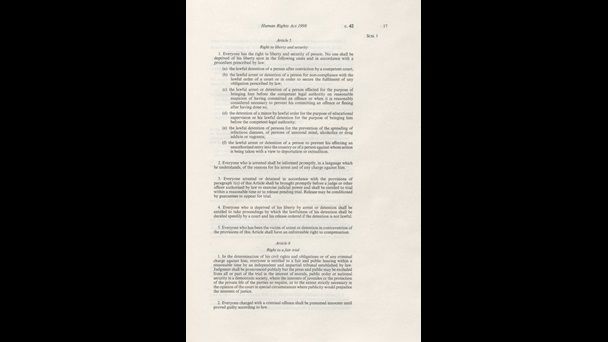
The Human Rights Act received royal assent on 9 November 1998 and came into force on 2 October 2000. The purpose of this legislation was to incorporate into United Kingdom law the rights and freedoms guaranteed under the European Convention on Human Rights (1953).
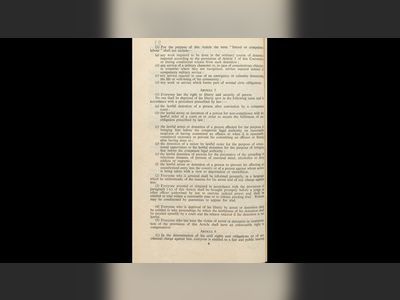
It enabled British courts to enforce the Convention without referring to the European Court in Strasbourg. The Act repeats verbatim the Articles of the European Convention, and in so doing re-establishes in British law the ideals of civil liberty inspired by Magna Carta. Article 6(1) reiterates clause 40 of the Charter, that justice should not be delayed, while Article 5, providing that, ‘No one shall be deprived of his liberty save … in accordance with a procedure prescribed by law’, echoes clause 39 that ‘No free man shall be seized or imprisoned … except by the lawful judgment of his equals or by the law of the land’.
The rights as set out in the Human Rights Act, 1998 are as follows:
the right to life
freedom from torture and degraded treatment
freedom from slavery and forced labour
the right to liberty
the right to a fair trial
the right not to be punished for something that wasn't a crime when you did it
the right to respect for private and family life
freedom of thought, conscience and religion
freedom of expression
freedom of assembly and association
the right to marry or form a civil partnership and start a family
the right not to be discriminated against in respect of these rights and freedoms
the right to own property
the right to an education
the right to participate in free elections
The rights as set out in the Human Rights Act, 1998 are as follows:
the right to life
freedom from torture and degraded treatment
freedom from slavery and forced labour
the right to liberty
the right to a fair trial
the right not to be punished for something that wasn't a crime when you did it
the right to respect for private and family life
freedom of thought, conscience and religion
freedom of expression
freedom of assembly and association
the right to marry or form a civil partnership and start a family
the right not to be discriminated against in respect of these rights and freedoms
the right to own property
the right to an education
the right to participate in free elections